


Choosing the Right Hardwood Finishes
Hardwood floors have long been a staple in educational and community gymnasiums. Celebrated for their classic beauty, design, durability, and safety for athletes of all ages. Hardwood floor systems come in all shape and sizes, but one of the most important factors to consider in the build and maintenance of these systems, is the protective finish on the surface.
Traditionally, oil-based or moisture cured urethanes have been widely used; however, as time moves on and focus shifts to using healthy and safe building materials, it becomes increasingly important to understand the long and short terms effects that these finishes have on the health of students. The adoption of healthy finishes is crucial in our ability to create safe and healthy spaces for athletes, installers, facility staff and the environment.
Three types of finishing options to understand:
- Oil Modified Urethane – petroleum based, blended with synthetic resins and plasticizers to create durable, moisture resistant surfaces.
- Moisture-Cured Urethane – Solvent based, more difficult to apply, extremely toxic odor, depend on the absorption of moisture to cure.
- Water-based Urethane – made of synthetic resins and plasticizers that create a moisture resistant surface. They finish clear, are much more odor friendly and dry quickly.
Health and Safety Considerations
The primary factor in choosing finishes for your floor is the role they play in supporting a healthy environment for your users. In B.C specifically, the use of moisture-cured urethane is still somewhat prevalent. Containing high levels of VOCs (volatile organic compounds), MCU has now been removed in most areas of North America, and is no longer on the list of acceptable finishings by the MFMA (Maple Flooring Manufacturers Association) – the only 3rd party regulatory body still in the industry that recommends products and best practises for gymnasium hardwood installation and maintenance.
With any finishing product, the VOC levels in the materials evaporate into the air, and prolonged exposure can negatively affect the health of its users. High levels of VOC’s are linked to a multitude of health issues – dizziness, headaches, respiratory problems, and even long-term conditions like asthma and liver damage. MCU, in its raw form, is manufactured with an advertised low-VOC content, but before it is applied to the maple floor it is mixed with a chemical called Xylene. Xylene is added as the drying agent and is a necessary component to the packaged MCU product to allow it to harden. The downside of this, is it the addition of Xylene spikes the VOC content to dangerous levels for days and sometimes weeks after the installation is complete, causing potentially dangerous levels of chemical exposure to users.
Water-based finishes and standard oil-modified finishes have substantially lower VOC levels, removing much of the danger of exposure throughout the installation process, many of which can be used as soon as they have dried. This benefits facilities by eliminating down-time post installation and allows facility staff to continue working during their application.
Environmental Considerations
The environmental impact of floor finishes is an extremely important factor in choosing which finishing materials to use on a hardwood floor. The production and disposal of the oil-based finishes contribute to air and water pollution, as they are manufactured using petroleum-based solvents, which increase the carbon footprint from manufacturing through to the disposal process.
Manufactured primarily with water-based solvents, the water-based finishes rely much less on the use of harmful chemicals and lessen the negative impacts on the environment. Supporting the move to water-based finishes encourages long term sustainability in reducing the harmful ecological footprint. With its extremely high VOC content, moisture-cured urethane creates the highest levels of potentially dangerous toxins into the environment. Among others, this is the main reason why MCU is no longer approved for use throughout most of North America and many manufacturers have discontinued its production.
Performance Characteristics
It has long been the thought that oil-modified finishes were more durable than their water-based counterparts. In the early days of the water-based finishes, this certainly may have been the case. With a thicker material build-up, oil-based finishes give the impression of higher performance and durability, but this is no longer the case with advancements in water-based finishes.
“Though many people believe oil-based finishes are more durable, superior technological advancements to water-based finish have been made in the last 40 years that prove water-based finishes last longer and hold their appearance longer. High quality floor finishes of both types can last about 10 years.”
- www.bona.com
Water-based finished are extremely resilient, creating a hard surface that withstand the abuse and foot traffic in busy facilities of all sizes.
The “durability” of the finish is often viewed as how hard the finish is when it is cured, and this can be demonstrated by considering the hardness of two different materials – a plastic frisbee, and a porcelain dinner plate.
When you hold a porcelain dinner plate in your hands it feels quite hard; however, drop this on the floor and it shatters.
Now, think of a plastic frisbee. This also feels nice and hard, and when you drop this on a concrete floor, you may get a little scratch or stuff, but it remains in good, useable condition. This is relative to the water-based finished we see more of for gymnasium use – the finish has a clean break when impacted with heavy, sharp objects, or when natural board expansion takes place.
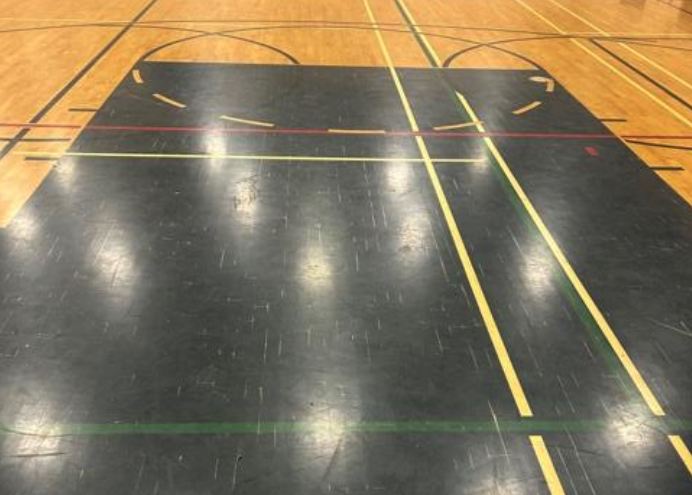
This is the same effect for the different finishes. Moisture cured urethane has the feeling of being extremely hard, and durable. However, when the natural wear and use of the floor takes its toll, you get large chips in the finish, or peeling strips where the maple boards may have expanded and contracted with natural changes in humidity and temperature. (See the pics below, of typical moisture cured urethane as the surface is chipped because of the “hardness” of the material)
Maintenance and Aesthetics
The application process of water-based finishes allows for easier and quicker coverage, providing a better chance for a flawless finish. With a simpler installation process, the maintenance of water-based finishes is an advantage to facilities who want less downtime for facility users.
Oil-based finishes typically yellow over time, causing an amber-like appearance. When recoating at regular intervals this creates deeper yellow and amber shades until a full sanding to bare maple is completed. Water-based finishes hold their originally clarity, which enhances and maintains the beauty of the wood grains and painted graphics.
Because of the nature of the water-based finishes, the natural beauty of the hardwood is enhanced and promoted throughout the life of the floor. With options in finishing designs from high gloss to satin finishes, the finish properties and non-yellowing nature of the water-based finishes create a long-lasting aesthetic design that shows for many years. In most cases MCU has heavy yellowing coloration over time, that doesn’t allow for the natural color, grain, and beauty of the hardwood to shine through, like a water-based finish would.
Long-Term Cost Savings
While the long-term durability of oil vs water-based finishes is similar, the cost savings of being able to open and use the facility days or weeks earlier than using a traditional oil-based finish can’t be overlooked. Completing multiple recoats and full refinishes over the life span of the hardwood floor, this contributes to large long-term cost savings for the facility.
Conclusion
The benefits of using water and oil-modified finishes have long-surpassed the need for the traditional moisture-cured urethane. When considering the importance of personal health, environmental impacts, long-term costs and aesthetics, while also maintaining performance and athlete safety, adopting the switch to much healthier finishes needs to be strongly considered when it comes to regular maintenance procedures for facilities of all shapes and sizes. Our children and the environment rely on us to understand how these decisions impact our planet for the future. In the building and maintenance industry far too often the adage of ‘we have always done it this way’, wins out to educating ourselves on why significant efforts are made to create healthier and safer environments for all users of our community facilities. With the impacts of adopting these changes being extremely significant, we will always encourage the use of safer materials in maintaining healthy and safe communities for years to come.
Kevin Luck
Titan Sport Systems Ltd


